Brain science, as it usually shows up in coaching, is a random mix of neurological studies, pop science, magical thinking, and irreproducible psychology nonsense. And while there is science behind it, the application is usually nothing more than self-help with fancy jargon.
One of the most common versions of this is the notion that you can rewire your brain. If you’re stressed, overwhelmed, or burning out, the problem is YOUR neural patterns. So you’ve tried the apps, the breathing exercises, the positive self-talk. You’ve invested in coaching that promises to help you “build new neural pathways.” And yet, you’re still exhausted. Still caught in the same contradictions. Still feeling like no matter how much you optimize yourself, it’s never enough.
Here’s why: you’ve been sold flexibility disguised as plasticity. And the difference matters more than you think.
Plasticity Minus Its Genius
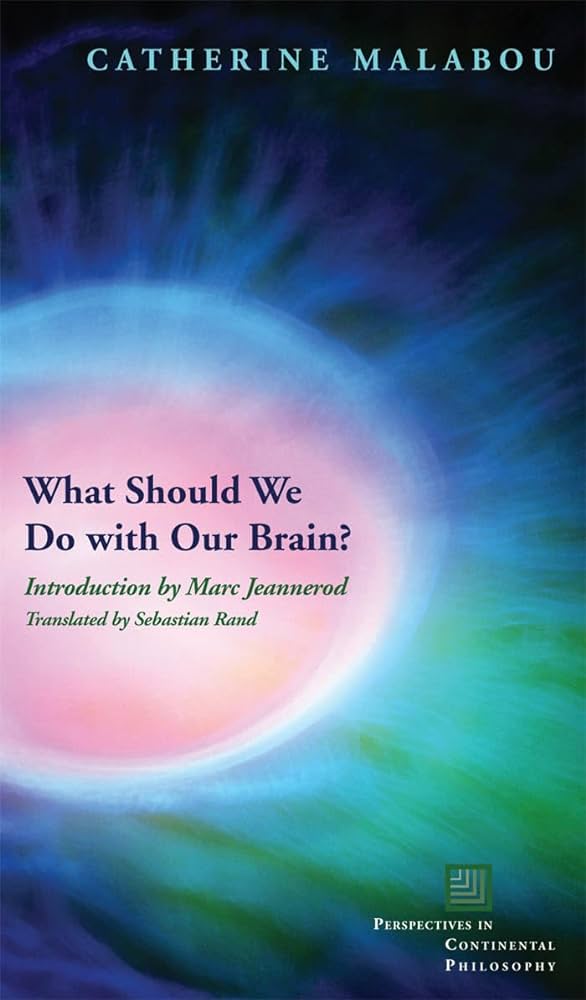
Brain plasticity is one of the most significant discoveries of modern science. But here’s the paradox Catherine Malabou identifies in her book What Should We DO With Our Brain?: despite all these “fascinating discoveries,” we are “neither freer, nor smarter, nor happier.” We have all-new knowledge about our brains, but it “changes nothing” about how we actually live and work. And the question is why?
Because the translation from what happens in our brains to what happens in our minds has been captured by an ideology of performance optimization. Plasticity promises liberation, but what we get is better adaptation to impossible conditions.
As Malabou puts it, “what flexibility lacks is the resource of giving form, the power to create, to invent or even to erase an impression, the power to style. Flexibility is plasticity minus its genius.”
In other words, plasticity is the notion that something can be re-formed. Whereas flexibility is merely the ability of something to adapt to new and certain circumstances. Plasticity is a practice for real change, whereas flexibility is about adapting to be better fitted to your environment and context.
This degradation of plasticity into flexibility has been packaged in economic terms. Your brain becomes “personal capital” that you must “invest optimally.” Performance potential, what neuroscience calls potentiation, gets reduced to increasing or decreasing your productivity.
This isn’t plasticity. This is flexibility masquerading as neuroscience. And it’s making you responsible for adapting to organizational dysfunction rather than questioning why it exists.
Why Rewiring Can’t Work
The notion of plasticity is often invoked to suggest that we can rewire our brains. Let’s look at what this metaphor implies: that our brain is wired a certain way, that it defaults to those patterns, and that we have control. We can change how our brain is wired and set it into a new set of static patterns that we believe will serve us better.
The consequences of this confusion are real:
- You blame yourself for stress that’s structurally produced. When your organization has contradictory priorities and impossible timelines, you think the problem is that you haven’t optimized your stress response enough.
- You accept endless adaptation as the price of professional survival. “Being flexible” becomes an existential requirement, and your inability to contort yourself into whatever shape is demanded becomes a personal failing.
- You never develop genuine agency because you’re trapped in the fantasy of total self-control. The “rewiring” promise says you can engineer yourself into the perfect worker. But this fantasy prevents you from recognizing the real choices available to you, including the choice to refuse, to resist, to not be flexible on demand.
To understand why the rewiring metaphor fails, we need to look at what it assumes about the brain itself. It treats your brain as a machine, circuitry that can be reprogrammed, wiring that can be replaced, a computer that can be updated. This is what Malabou calls the “brain-machine” model, and it’s what coaching has built its neuroscience story on.
But plasticity research itself has moved beyond this. Malabou argues that the discovery of plasticity should shift us from “brain-machine” to “brain-world.” Your brain isn’t programmable hardware. It’s a living, historical, social organ embedded in a world. It’s shaped by relationships, by experiences, by the material and social conditions you live in. It IS a history, not just a mechanism with a history.
If your brain were a machine, you could just rewire it. But it isn’t, and you can’t. When you see that your brain is a world-embedded history, then you recognize that struggles aren’t personal software bugs to be patched. They’re responses to real contradictions in your environment. And the solution isn’t better self-management. It’s different conditions.
This is why understanding real plasticity matters. Not because it offers another optimization technique, but because it reveals what flexibility ideology hides: the possibility of transformation that isn’t just better adaptation.
What does that transformation actually look like? As Malabou points out, in mechanics, “a material is called plastic if it cannot return to its initial form after undergoing a deformation. Plastic in this sense is opposed to elastic. Plastic material retains an imprint and thereby resists endless polymorphism.”
There is another aspect of plasticity that is implied here. It can be both destructive and constructive. All of our experiences can change our brains, and in some cases, dramatically so. When people have traumatic brain injuries, it changes the way their brains function. It can even change their entire personality. In this way, plasticity is related to who we are. In fact, it shows that who we are is a constant process of becoming.
It also shows that while we often think of plasticity as generative, it can also be destructive. This isn’t gradual optimization. It’s transformation through destruction. Something gets destroyed, and something fundamentally different emerges. This is the dimension of plasticity that flexibility ideology must suppress: real change can be violent, irreversible, and beyond our control.
Plasticity doesn’t mean we can do or change anything. We are limited by our history and context. Our brain develops in a certain way from birth and follows a developmental cycle embedded in our DNA. In addition, it is constantly shaped by the events of our lives, and because it is plastic, it can’t go back to what it was before. It always changes into something new and different. The brain’s plasticity does not open up endless possibilities.
Our brains are thus formed through both careful sculpting in response to our circumstances and to dramatic events. And plasticity opens up additional possibilities; we are not condemned to repeat. As Malabou explains, “The word plasticity thus unfolds its meaning between sculptural molding and deflagration, which is to say explosion. From this perspective, to talk about the plasticity of the brain means to see in it not only the creator and receiver of form but also an agency of disobedience to every constituted form, a refusal to submit to a model.”
What Should We Do With Our Brains?
If you accept that your brain is a history embedded in a world, constantly being shaped by conditions you don’t fully control, what does that change about how you lead, work, and make choices? Fundamentally, that leads to the question, which is the title of Malabou’s book: What should we do with our brains?
This is a moral and ethical question. The real value of plasticity is in seeing the possibility. In seeing that things can exist in a new way. And here, part of this possibility is to blow things up, to refuse what seems given, and to not be flexible on demand. It isn’t about contorting to fit within a new space. It’s about changing into something new. And this is hard. We cling to our identities and don’t want to lose them. But that is exactly what plasticity promises. It doesn’t promise that we can be anything we want to be. It takes into account our historical contingent position but allows for changes from that point.
Malabou offers a suggestion, “To cancel the fluxes, to lower our self-controlling guard, to accept exploding from time to time: this is what we should do with our brain.”
What does this mean? It means that when your organization demands that you implement contradictory initiatives with the same team, refusing might mean naming the contradiction explicitly rather than trying to ‘make it work.’ When the answer to burnout is another resilience workshop, explosion might mean saying ‘no, we need different conditions, not better coping.’ When flexibility training tells you to adapt to dysfunction, disobedience might mean insisting the dysfunction changes instead.
The starting point is the development of what Malabou calls ‘consciousness of the brain.’ Not consciousness OF neuroscience, but consciousness of how your actual brain is being shaped right now by your work. By the contradictions you navigate. By the chronic stress you endure. By the impossible demands you try to meet. Your brain IS your work history, embedded in your neurons. Becoming conscious of this means recognizing that your struggles aren’t personal defects that need to be optimized. They’re responses to real conditions requiring different choices.
We do need to recognize that those changes are not things we fully control. This isn’t a call for voluntarism or the self-help guidelines that you can rewire your brain. Rather, the recognition that every event that happens, whether you plan it or not, whether you want to or not, changes your brain and changes who you are. So you do have choices within that flow. And you will be changed by both the choices you make and that which happens to you.
This is the real value of coaching: not optimizing yourself for dysfunctional conditions, but developing consciousness of how those conditions are shaping you—and making different choices from that awareness. I help leaders navigate the contradictions they can’t resolve, recognize the refusals that matter, and transform through destruction rather than endless adaptation. If you’re exhausted from trying to rewire yourself into someone who can tolerate the intolerable, let’s talk about a different approach.